

Garlic passes through six steps before it reaches international buyers: cleaning, drying, peeling, grading, disinfection, and packaging. Each step matters—but one step determines whether your garlic sells at a premium or gets discounted at the dock. Here's why grading is the step that makes all the difference.
The Six Steps at a Glance
Garlic is one of the most widely traded agricultural commodities in the world. Before it reaches buyers in Europe, Asia, or the Americas, it must go through a carefully executed process:
Step | Purpose |
|---|---|
1. Cleaning | Remove soil and debris without damaging the protective outer layers |
2. Air drying | Reduce moisture content to prevent mold and bacterial growth |
3. Peeling | Remove the dry, papery outer skin (optional, market-dependent) |
4. Grading | Sort by size and weight—this is where value is created |
5. Disinfection | Eliminate pathogens that could cause spoilage during transit |
6. Packaging | Protect garlic from physical damage, moisture, and contamination |
The first three steps prepare the garlic. The last two steps protect it. But the fourth step—grading—is where the value is realized.
Step 4: Grading — Where Value Is Created
Different garlic sizes command different prices in different markets. Export buyers demand consistent sizing—mixed sizes mean rejected shipments. A garlic bulb that's large enough for premium retail shouldn't end up in a bulk processing pack. And a small bulb shouldn't drag down the price of an entire shipment.
Manual sorting can't keep up with commercial volumes. It's slow, inconsistent, and increasingly expensive. That's why commercial garlic packers turn to mechanical grading.
Fstsort's garlic drum grader is designed specifically for this task.
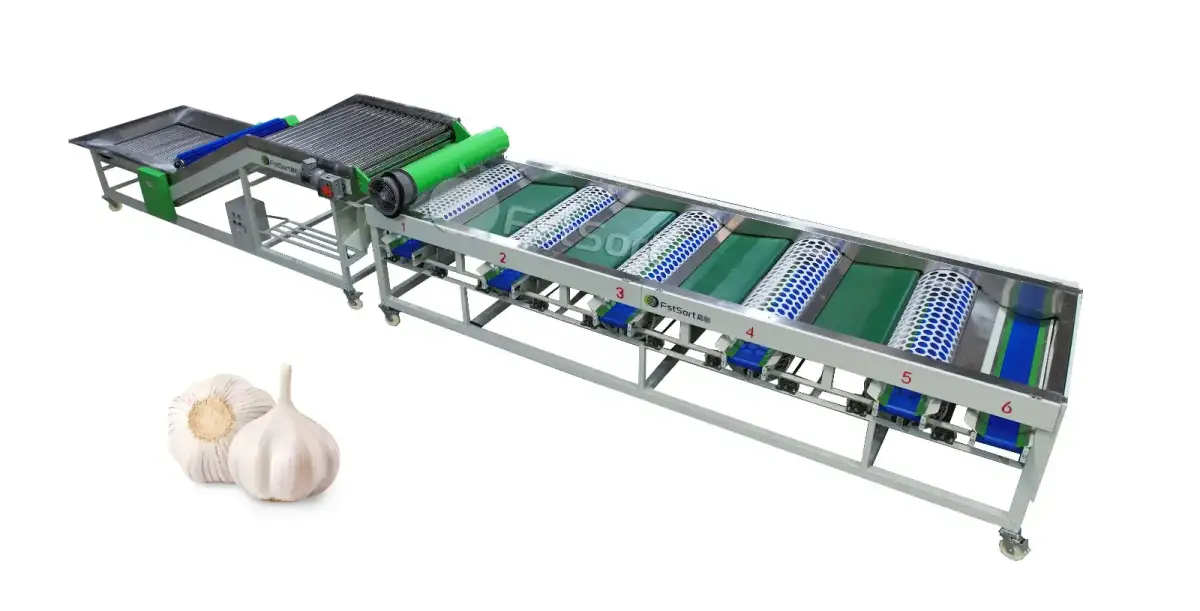
It uses a rotating drum with round holes of varying sizes. Garlic bulbs tumble gently through the drum—smaller ones fall through first, medium ones through the next, and the largest continue to the end. Each size collects in its own outlet, ready for its specific market channel.
What the drum grader delivers:
Feature | What It Means for Your Garlic |
|---|---|
5–8 tons per hour | Process commercial harvest volumes with ease |
3–6 adjustable grades | Sort into multiple size grades to match different market requirements |
Customizable hole sizes | Match your exact diameter specifications |
Gentle tumbling action | No cracking, no damage—garlic stays intact |
Air blower | Removes loose skins before grading begins—keeps the product clean |
The result: garlic that's graded accurately, gently, and at scale—ready for premium pricing in export markets.
Why Grading Determines Everything
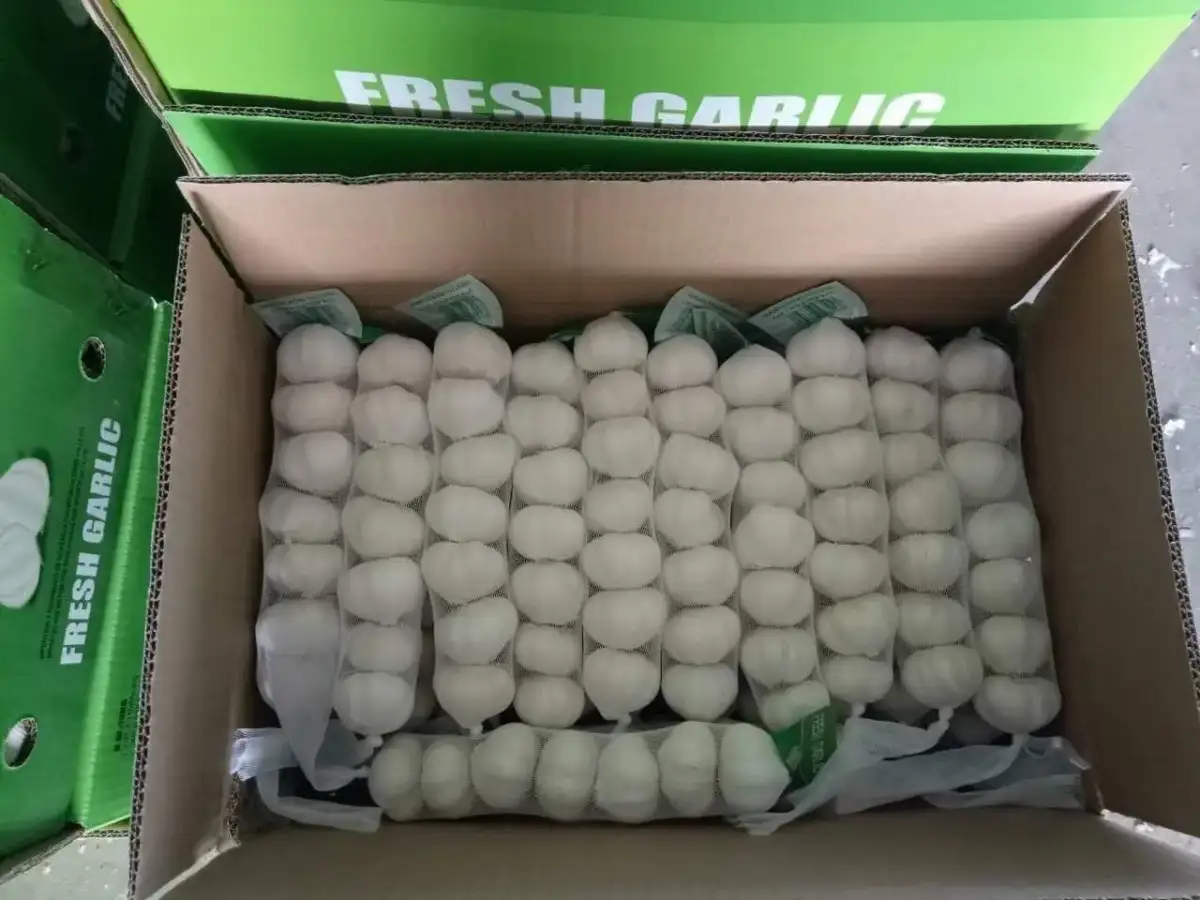
Here's what many growers don't realize: without proper grading, the other five steps matter much less. You can clean, dry, peel, disinfect, and package perfectly—but if your garlic is inconsistently sized, buyers will still discount the entire shipment.
The reverse is also true. With accurate grading, the value of your entire harvest increases. Large bulbs go to premium markets. Medium bulbs go to standard retail. Small bulbs find their appropriate processing channel. Every bulb earns what it's worth.
Fstsort's garlic graders are already helping packers across multiple markets achieve that consistency—turning mixed harvests into premium-grade exports.
Explore the full specifications on our garlic grading machine page →