

Garlic is one of the most challenging crops to grade by size. Learn how a specially designed garlic grading machine solves the irregular shape, loose skin, and jamming problems that slow down your packing line.
Garlic is one of the world's most widely used seasoning crops—and one of the most frustrating to grade.
Unlike oranges, apples, or tomatoes—which are relatively uniform in shape and easy to roll through a standard sizer—garlic bulbs are irregular, inconsistent, and notoriously difficult to handle on a grading line.
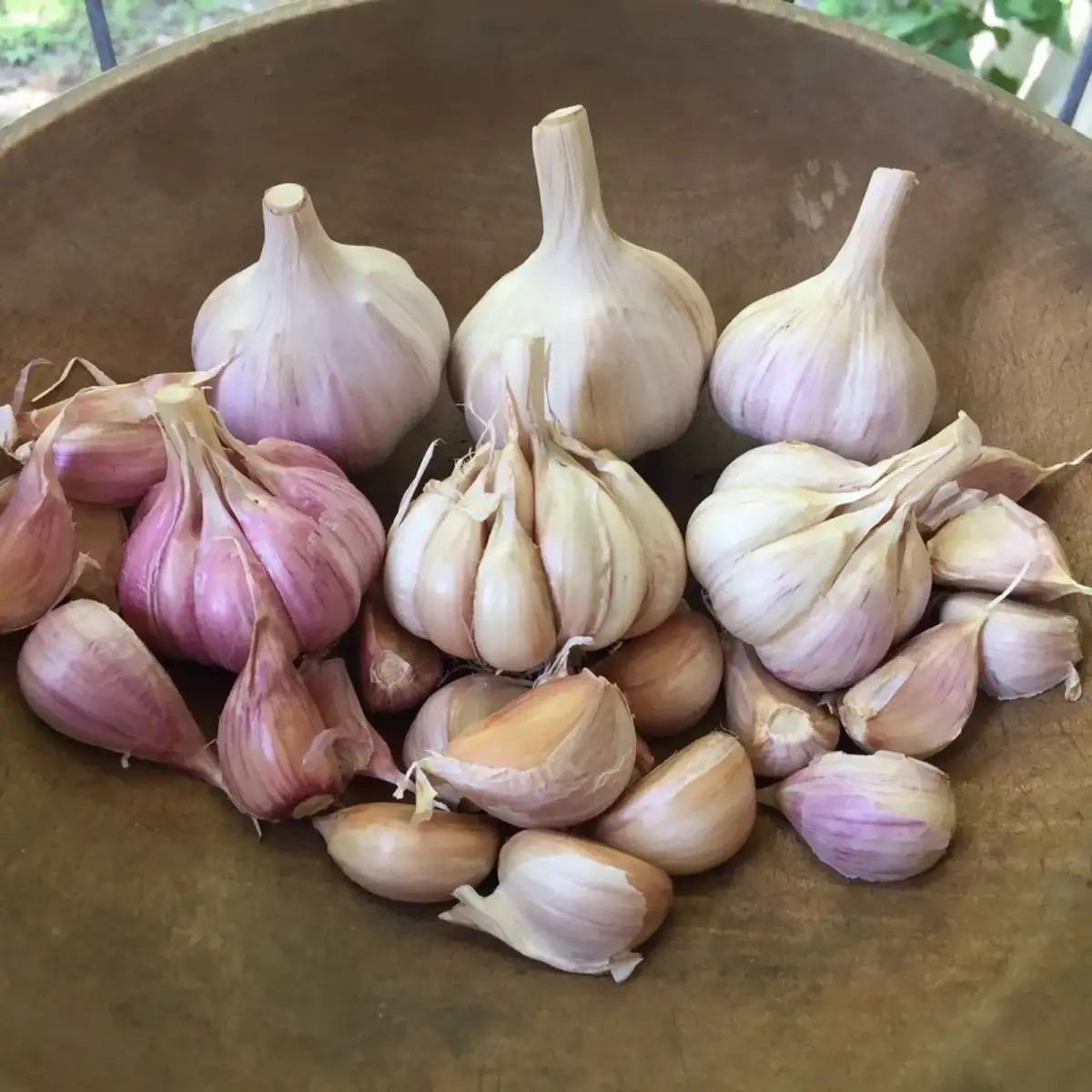
Some bulbs are large, some are small. Some have tight, compact skins; others have loose, flaky outer layers that peel off during handling. And at the end of each bulb, there's a protruding neck that can catch on rollers, jam the machine, and throw off the entire grading process.
For years, garlic packers have had to choose between two imperfect options:
· Manual grading — labor-intensive, slow, and subjective. Workers sort by eye, which means inconsistent results and rising labor costs.
· Generic sizing equipment — designed for round fruits, retrofitted for garlic. These machines often jam, mis-grade irregular bulbs, and struggle with the loose skins that clog rollers and reduce accuracy.
Neither option is good enough for today's export markets, where buyers demand uniform sizing, consistent quality, and traceable packing standards.
That's why Fstsort developed a grading machine built specifically for garlic.
What makes garlic so hard to grade—and how Fstsort solves it
The Challenge | How Fstsort's Design Solves It |
|---|---|
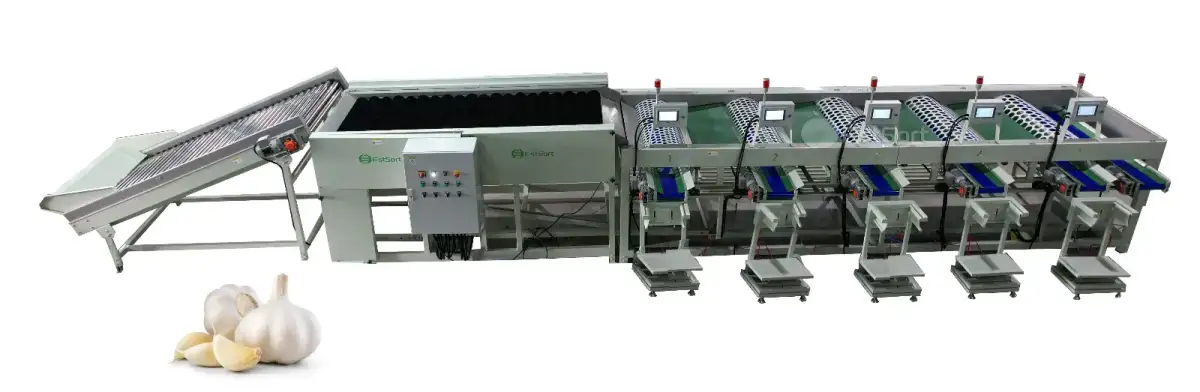
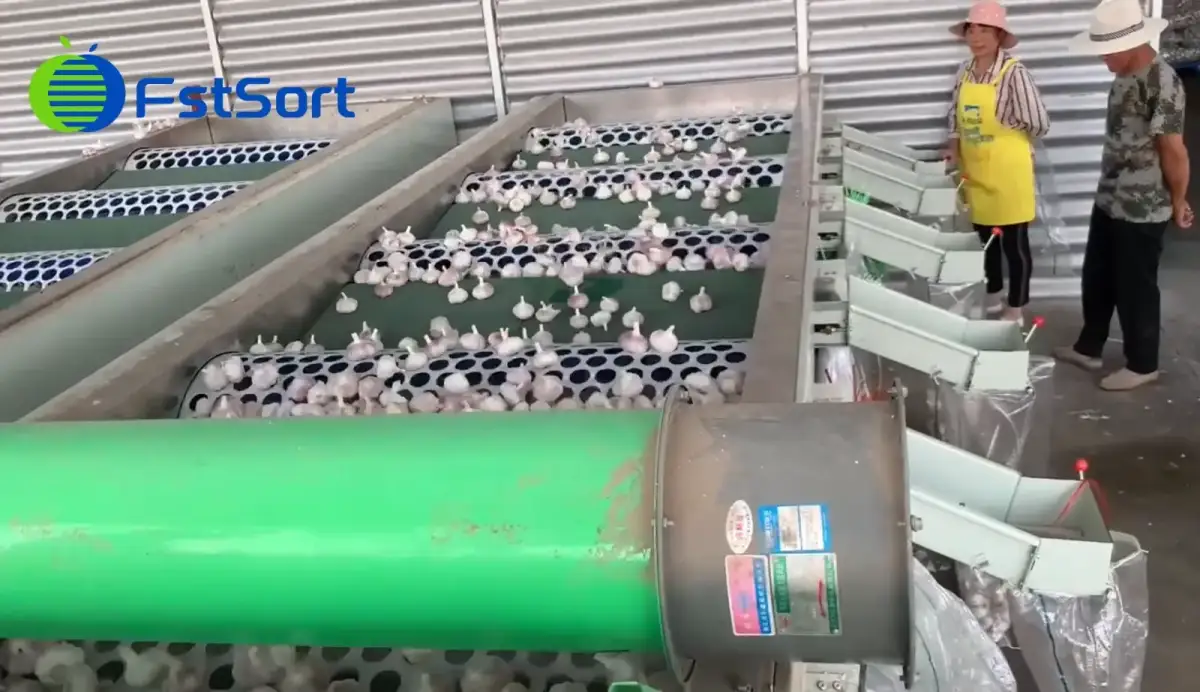
Irregular bulb shapes — no two garlic bulbs are exactly alike; standard rollers can't handle the variation | A drum-style grading mechanism with angled green belts between each roller that rearrange the orientation of each bulb before it enters the sizing drum—ensuring every bulb is presented correctly for accurate measurement |
Loose, flaky outer skins — skins peel off during handling, clogging rollers and contaminating the line | An integrated air blower positioned between the inspection table and the grading section that blows away loose skins and debris before bulbs enter the grading stage—keeping the line clean and accurate |
Bulb necks catching on rollers — the protruding stem at the end of each bulb gets stuck in standard screens, causing jams and mis-grades | The angled belt design repositions each bulb so the neck doesn't interfere with the grading process—eliminating jams and improving accuracy |
These aren't generic features adapted for garlic. They are design decisions made specifically because of how garlic behaves on a processing line.
Beyond the basics: what the Fstsort garlic grading machine delivers
What You Get | Why It Matters for Your Operation |
|---|---|
5–8 tons per hour capacity | Process peak-season volume without bottlenecks—keep your line moving when garlic comes in fast |
4–6 adjustable grades | Sort by diameter to meet different market requirements—from local wholesale to export-grade specifications |
PVC-covered stainless steel rollers | Unlike standard 201 stainless rollers that bend and tarnish within months, our rollers are stronger, anti-water, and built to last |
Adjustable grading speed | Match the speed to your variety and condition—slow down for delicate bulbs, speed up for robust ones |
Special outlet design | Outlets are positioned and shaped for direct bag and box packing—less handling, less labor, less damage |
Is this the right machine for your operation?
The Fstsort garlic grading machine is designed to be flexible. Whether you need just the sizer or a full cleaning-grading-packing line, the system adapts to your operation. And because it's built specifically for garlic—not adapted from a fruit grader—you get higher accuracy, fewer jams, and less waste from day one.
Ready to see it in action? Contact our team for a video demonstration or request a customized quote based on your variety, capacity needs, and target markets.
Want to learn more about garlic grading equipment? Check out our Garlic Cleaning Grading Machine→
Fstsort has been manufacturing fruit and vegetable processing machinery since 2008, serving customers in 22 Chinese cities and over 15 countries worldwide.