
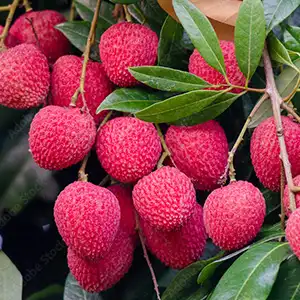
Introduced to Australia over a century ago, lychees have become a major horticultural success story. Today, varieties like Kwai Mai Pink are exported to Hong Kong, the United States, New Zealand, and Canada. But as export volumes rise, one question grows more urgent: how do you sort thousands of tons of delicate lychees efficiently—without damaging the fruit?
The Australian Lychee Industry: A Growing Export Success
Lychees were first introduced to Australia more than 100 years ago. Today, they are a significant horticultural crop, grown primarily in the subtropical regions of Queensland and New South Wales.
Among the many varieties cultivated in Australia, Kwai Mai Pink is the most widely planted. It is prized by growers and consumers alike for its excellent appearance, reliable shelf life, appealing taste, and consistent market price. It has become the dominant export variety for Australian lychees—shipped to Hong Kong, the United States, New Zealand, and Canada.
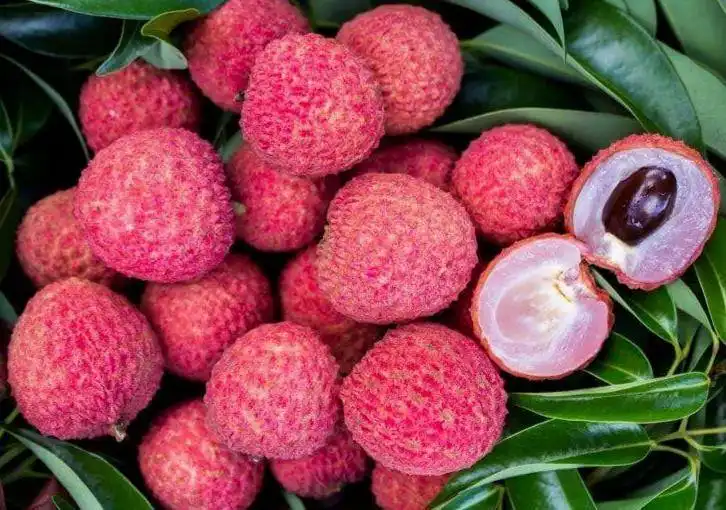
In recent years, both domestic and international demand for Australian lychees has grown steadily. More growers are entering the export market, and shipment volumes continue to rise year after year. This growth is a clear signal of the industry's health—but it also creates a pressure point.
The Sorting Challenge: Volume Meets Delicacy
As export volumes increase, so does the pressure on packing houses. More fruit means more sorting. And lychees are among the most delicate fruits to handle.
Their thin skin and juicy flesh bruise easily. Rough handling during sorting can cause browning and damage that makes the fruit unmarketable for export. Manual sorting, once sufficient, is now a bottleneck—too slow, too inconsistent, and increasingly expensive.
For Australian lychee growers and packers, the equation is simple: you can't scale exports without scaling your sorting capacity. And scaling sorting capacity means moving beyond manual methods.
A Sorting Solution Built for Australian Growers
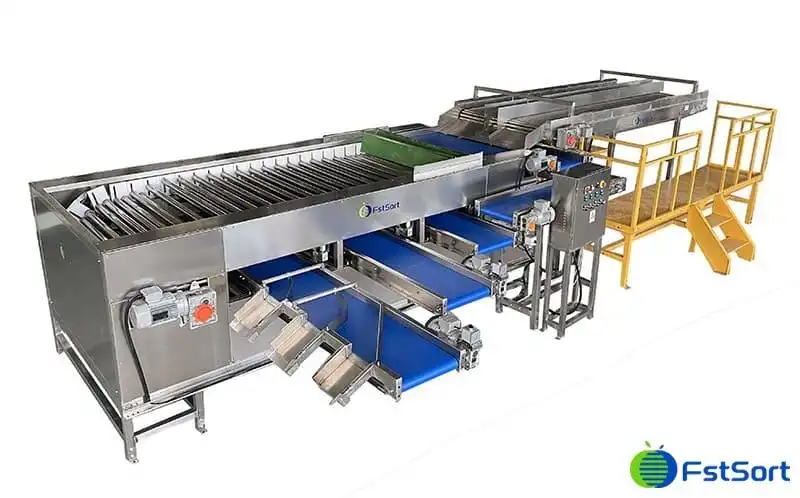
Fstsort recently delivered a customized lychee grading machine for an Australian customer—a solution designed specifically to meet the needs of a growing export operation.
The machine combines simplicity with efficiency:
· Inspection table — Workers remove defective or damaged fruit before grading
· Roller grader — Sorts lychees by diameter with adjustable precision
· 3–6 adjustable grades — Match different market requirements from a single harvest
· Simple operation — Workers get up to speed quickly—no complex training required
· 2000–3000 kg/h capacity — Efficient enough to keep pace with commercial harvest volumes
The result: consistent grading, less waste, and the throughput needed to meet rising export demand.
Why it works for Australian growers:
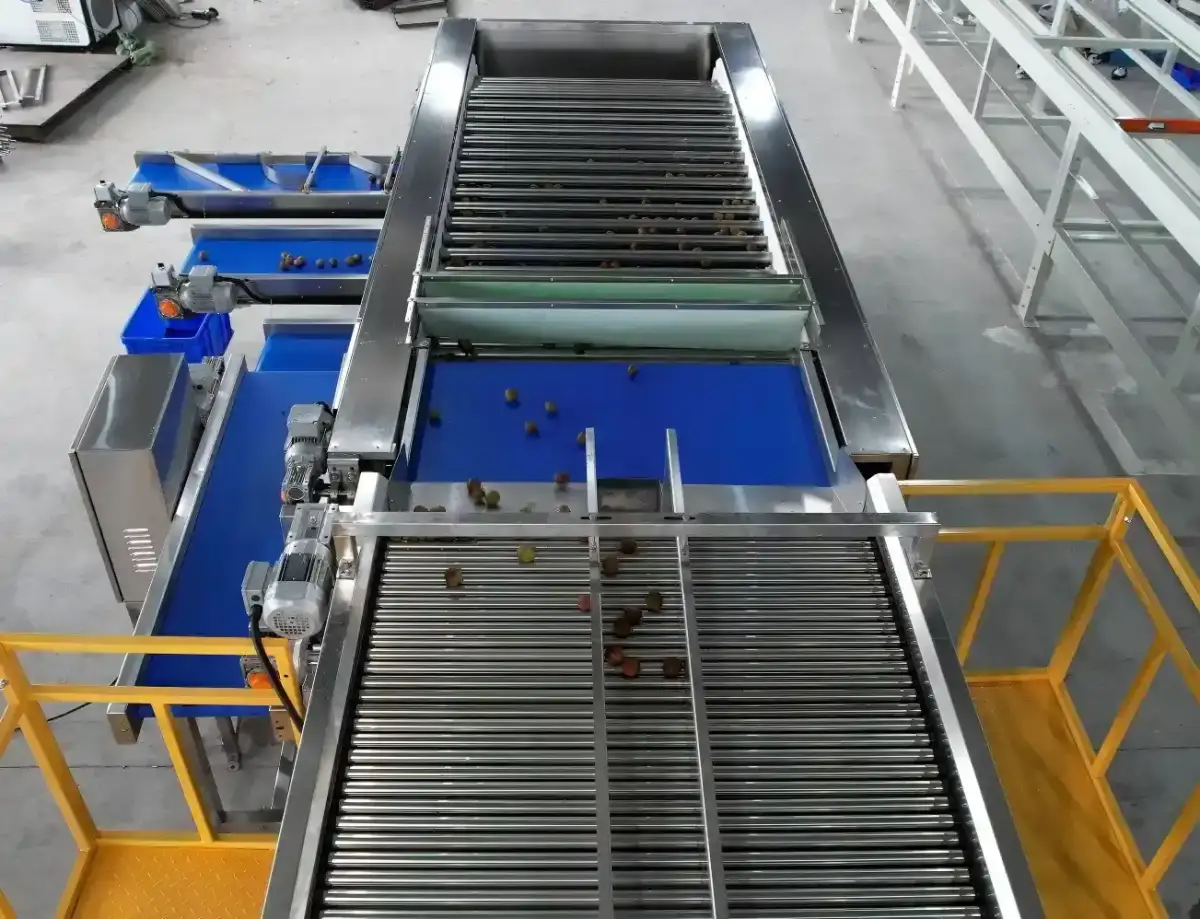
Feature | What It Means for Your Operation |
|---|---|
Adjustable diameter sorting | Handle Kwai Mai Pink and other varieties with precision—one machine, multiple grades |
2–3 tons per hour | Process commercial volumes efficiently without bottlenecks |
Gentle roller design | No bruising, no browning—fruit stays export-ready |
Simple setup | Easy to operate and maintain—no engineers required |
Customizable | Optional destemming, washing, and pre-cooling modules available |
Beyond Sorting: A Complete Line for Export-Ready Lychees
For packers who need more than just sizing, Fstsort offers a complete lychee processing line—from destemming to packed boxes:
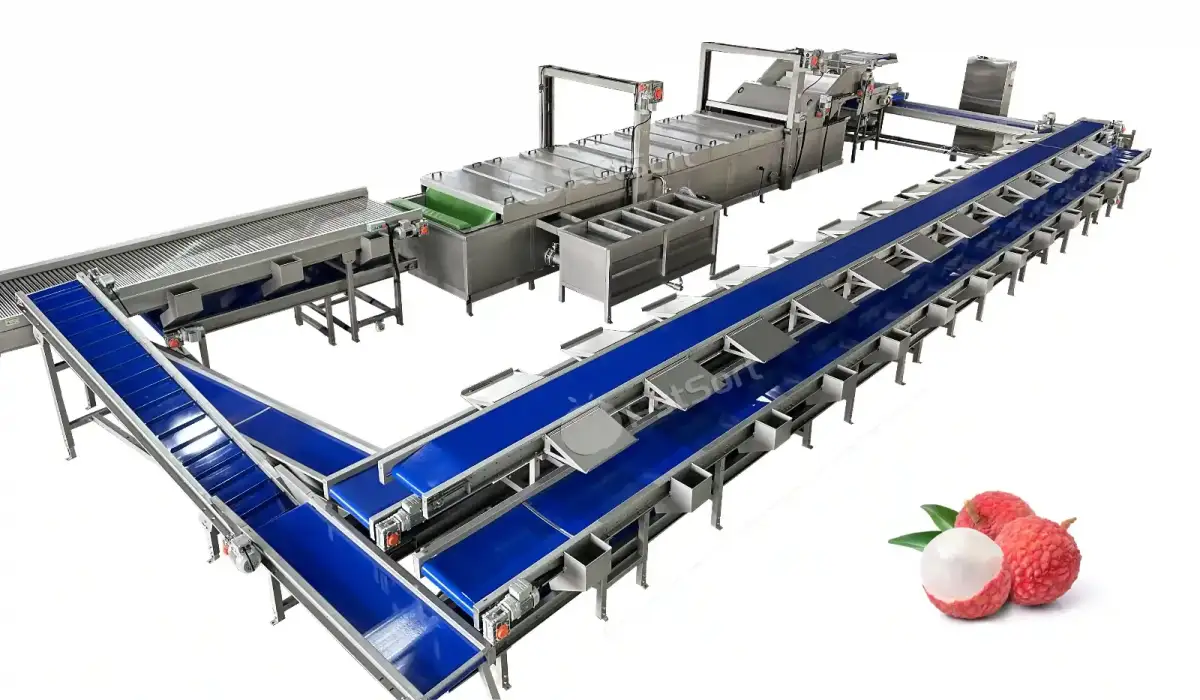
· Destemming table — Remove stems and leaves before grading (recommended for freshly harvested fruit)
· Washing and pre-cooling — Cold water soak or forced air cooling extends shelf life and maintains color
· Inspection table — Manual removal of defective fruit
· Roller grading — Size sorting with 3–6 adjustable grades
· Automatic box filling and weighing — On selected grade exits for consistent pack weights
Fstsort has already delivered multiple lychee processing solutions to Australian customers—helping them move from manual sorting to automated grading and meet the growing demand of export markets.
Explore the full specifications on our lychee grading & packing line page →