
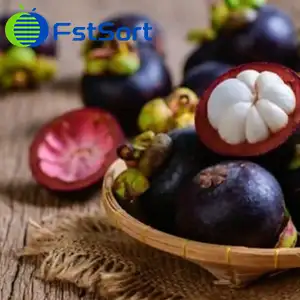
Indonesia's Java region has started its new mangosteen harvest season—and this year, the outlook is stronger than ever. Favorable weather has boosted both yields and quality, and overseas demand is surging. For growers and exporters, the window is open. But capturing this opportunity starts with one critical step: sorting and grading your fruit accurately.
A Season of Stronger Yields, Better Quality
Indonesia is one of the world's most important mangosteen producers, with growing areas spread across almost all islands—including Java, the country's most productive region.
In Java, the new mangosteen harvest season has recently begun. The harvesting period typically runs from early November to late December—a narrow window when fruit must be picked, sorted, and packed quickly.
This year, the outlook is particularly promising. Favorable weather conditions throughout the year have resulted in higher yields than last season and better overall fruit quality. At the same time, overseas demand remains strong, with exports from the Java region already up compared to the same period last year.

For Indonesian mangosteen growers and exporters, the equation is simple: more fruit, better quality, stronger demand—but only if the fruit reaches buyers in premium condition.
The Sorting Challenge: Protecting a Delicate Fruit
Mangosteens are prized for their sweet, tangy flavor and delicate white flesh. But they are also among the most bruise-sensitive fruits in the produce aisle. Their thick purple rind protects the interior—but only if handled carefully during sorting and packing.
Traditional manual sorting is slow, inconsistent, and increasingly expensive. A single rough pass can cause internal bruising that isn't visible until the fruit is opened—by which time, the damage to the brand is already done.
For exporters supplying premium markets in China, the Middle East, and beyond, the message is clear: accurate, gentle sorting isn't optional—it's essential.
Sorting That Protects Value
Fstsort's mangosteen sorting machine is designed specifically for the unique challenges of this delicate fruit.

It uses a roller sizing method that sorts mangosteens by diameter with precision and care—no dropping, no rough handling, no hidden damage.
The machine handles the entire sorting workflow in one continuous flow:
Stage | Equipment | Function |
|---|---|---|
1. Cleaning | Bubble washing tank + soft brushes | Removes dust, insects, and field debris without damaging the rind |
2. Inspection | Conveyor belt with manual sorting | Workers spot and remove defective fruit before grading |
3. Grading | Roller size grader | Sorts by diameter with 3–6 adjustable grades |
4. Packing | Discharge belt | Graded fruit is delivered to packing stations by size |
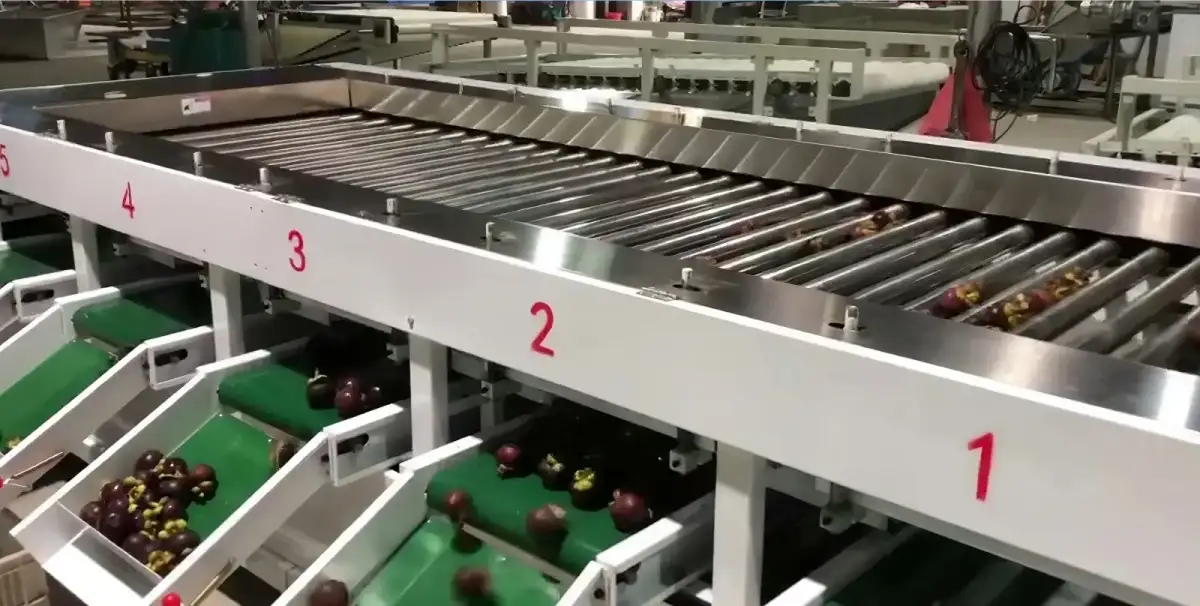
Key capabilities:
Feature | What It Means for Your Mangosteens |
|---|---|
6 tons per hour | Process commercial harvest volumes efficiently |
3–6 adjustable grades | Sort into multiple size grades to match different market requirements |
Gentle handling | Soft rollers protect delicate fruit—no bruising, no internal damage |
Adjustable speed | Match the sorting pace to your harvest volume and fruit condition |
Stainless steel construction | Hygienic, durable, and easy to clean |
The result: mangosteens that are clean, accurately graded, and gently handled—ready for the buyers who pay premium prices for quality fruit.
Beyond Sorting: A Complete Processing Line
The right sorting equipment doesn't just separate fruit by size. It protects the quality that makes Indonesian mangosteens competitive in export markets.
The mangosteen sorter can also be integrated with an electronic weight sorting system for packers who need weight-based grading—offering ±2g accuracy with 6–12 weight grades and 1–4 configurable lanes.
Whether you need diameter sorting, weight grading, or a complete cleaning-sorting-packing line, the system adapts to your operation.
Explore the full specifications on our mangosteen cleaning sorting machine page →